
Robust analysis starts with well-understood data. This workshop introduces practical approaches to inspecting, validating, and preparing image datasets for downstream use.

This course is offered by Helmholtz Imaging in cooperation with HIDA
Helmholtz Imaging
Helmholtz Imaging’s mission is to unlock the potential of imaging in the Helmholtz Association across all research fields along the entire imaging pipeline, to improve leverage and accessibility of the innovative imaging modalities, application and data treasures, and to enable the delivery of generalizable imaging solutions. All scientists can contact the platform for direct support for imaging-related inquiries or the connection with other imaging experts from Helmholtz.
Credit: Sonja Fritzsche, MDC
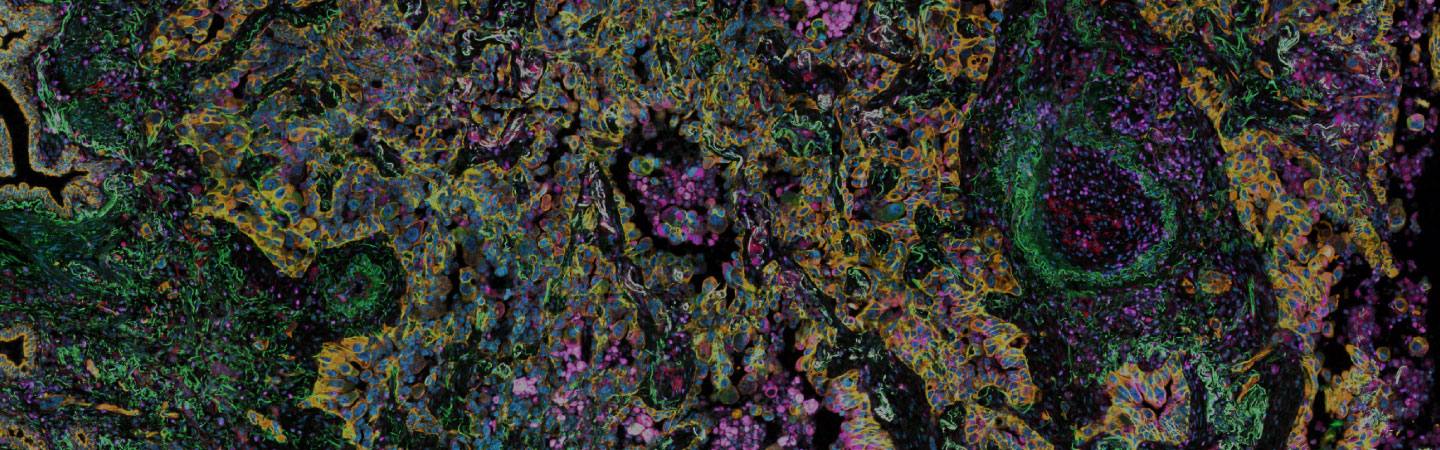
Image description: A highly detailed, abstract-looking microscopy image filled with tightly packed, irregular cell-like shapes. The scene is dominated by bright orange and blue outlines, with green streaks and patches weaving through the tissue, plus many small pink and purple clusters scattered throughout. The background is mostly black, which makes the fluorescent colors stand out strongly. Information about the image: To develop novel strategies targeting the tumor microenvironment in lung adenocarcinoma, the TME was stained for cell type specific markers and imaged on an Axioscan 7 Slidescanner.
In the first session, we’ll explore best practices in image dataset quality control and data exploration—learning how to spot dataset issues, visualize distributions and metadata, and prepare images for downstream analysis.
We’ll also introduce PixelPatrol as a practical tool to support these tasks. In the second session, after you’ve run PixelPatrol on your own datasets, we’ll reconvene to discuss questions, review results, and refine insights. This two-part workshop will help you turn raw image collections into high-quality, analyzable data.
Learning goals
Session 1 – Concepts and Tools
- Understand key principles of image dataset quality control and why early validation matters.
- Learn how to identify common dataset issues (outliers, inconsistent metadata, acquisition differences).
- Explore dataset statistics and visual summaries for structure, balance, and potential biases.
- Get hands-on experience using PixelPatrol for dataset-wide visualization, metadata inspection, and report generation.
Session 2 – Application and Reflection
- Apply PixelPatrol to your own datasets and interpret its outputs.
- Troubleshoot real-world dataset issues found by PixelPatrol.
- Discuss results and strategies for improving data quality.
- Develop a workflow for integrating dataset validation into your research pipeline.
Course date
Register now:
For For more information on how to register, please follow the link on the course date.
Prerequisites
To participate in this course, it is best to have familiarity with digital images and image processing.
Target Group
This course mainly targets researchers working with image datasets in fields such as microscopy, biomedical imaging, earth and material science.
Instructor
Ella Bahry (Helmholtz Imaging, MDC)
This course is free of charge.
The Data Science Course Portfolio
This course is part of the Data Science Course Portfolio, curated by the five Helmholtz Information & Data Science Platforms - Helmholtz AI, Helmholtz Imaging, HIDA, HIFIS, HMC. Find out more on the Course Portfolio here.
