Brains, Data, Algorithms: Fresh Perspectives from Montréal
How can AI help us better understand the human brain? At the CIFAR–Helmholtz Fall School in Montréal, 29 early-career researchers explored this question through fresh scientific perspectives, interdisciplinary exchange, and plenty of opportunities to develop new ideas together.
From October 13 to 16, 2026, Montréal became a hub for exploring the intersection of artificial intelligence and neuroscience. Jointly organized by the Canadian Institute for Advanced Research (CIFAR) and HIDA, the Fall School offered a diverse program of scientific lectures, interactive sessions, and interdisciplinary exchange. At the same time, it strengthened scientific ties between Germany and Canada.
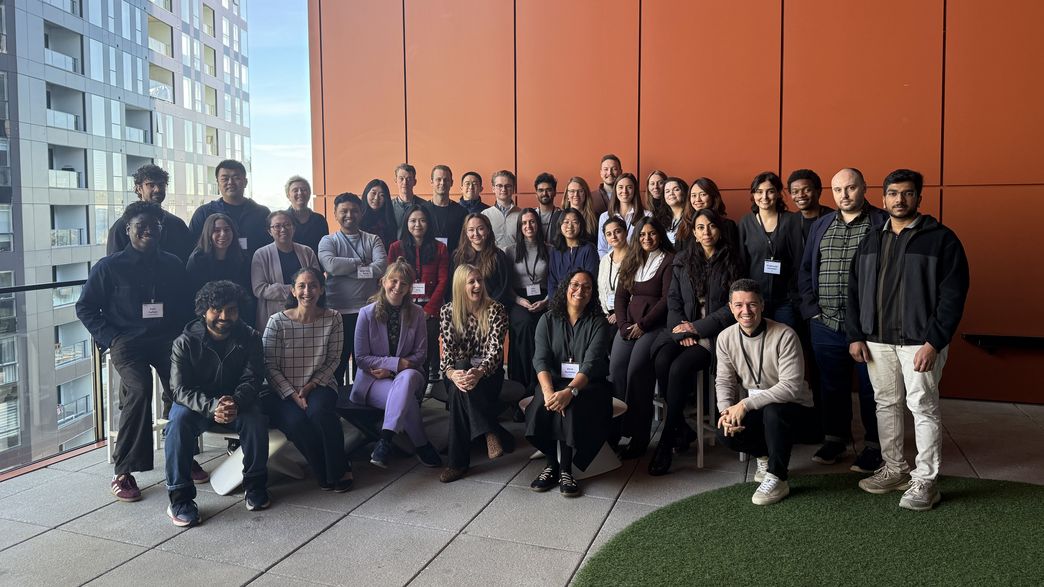
The Fall School brought together 14 researchers from Helmholtz and 15 from the international CIFAR research community, representing a wide range of disciplines and research interests. The Helmholtz participants came from different Helmholtz Centers and Helmholtz Information & Data Science Schools, adding to the diversity of perspectives.
Exploring the intersection of AI and neuroscience
The scientific program reflected the breadth of research at the intersection of artificial intelligence and neuroscience. Matthew Perich (Université de Montréal and Mila) explored the potential of neural foundation models for real-time decoding of brain activity, while Anne Maass (German Center for Neurodegenerative Diseases, DZNE) examined brain aging and lifestyle factors using multimodal neuroimaging.
Catherine Duclos (Université de Montréal) offered insights from clinical neuroscience, and Charles Rathkopf (Forschungszentrum Jülich and University of Bonn) discussed the ethical questions raised by decoding mental information from brain data. Baobao Zhang (Syracuse University, CIFAR Azrieli Global Scholar) expanded the perspective to the societal implications and governance of artificial intelligence.
The Fall School also welcomed Christian Wagner, German Consul General in Montréal, and Jean Benoît Leblanc, Executive Director at Global Affairs Canada, who addressed participants in their opening remarks, highlighting the importance of scientific cooperation between Germany and Canada.
Learning together across disciplines
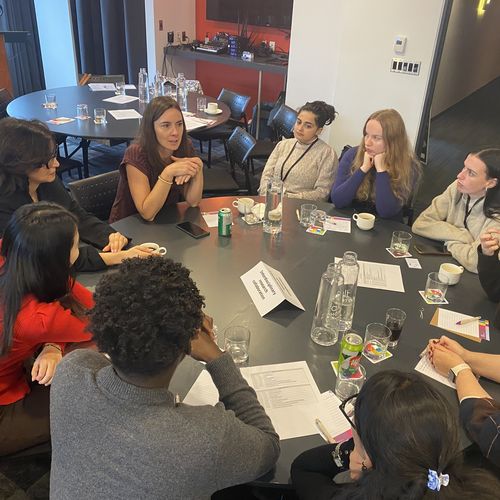
The program went beyond traditional lectures, with interactive sessions designed to encourage discussion, collaboration, and the exchange of ideas. Participants shared insights into their own research, explored different approaches, and connected with colleagues from other disciplines.
An interactive challenge led by Colin Bredenberg (University of Oregon) encouraged participants to think creatively and work together across disciplines. Beyond the classroom, a visit to The Neuro (Montreal Neurological Institute-Hospital) at McGill University offered insights into cutting-edge neuroscience research.
The program also featured a lecture by Nicole Rust (University of Pennsylvania), “From Subjective Feelings to Brain Mechanisms”, as part of McGill University’s Bindra Lecture Series.
Building an international research community
Beyond the scientific program, the Fall School offered opportunities to forge connections across disciplines, institutions, and countries. For the early-career researchers, it was a chance to exchange expertise, identify shared research interests, and build networks that could lead to future collaborations.
The close partnership between CIFAR and HIDA was key to bringing these communities together. By connecting CIFAR’s international research network and its strong ties to Canada’s scientific community with Helmholtz’s interdisciplinary expertise, the Fall School created a space for scientific exchange and new perspectives across borders.