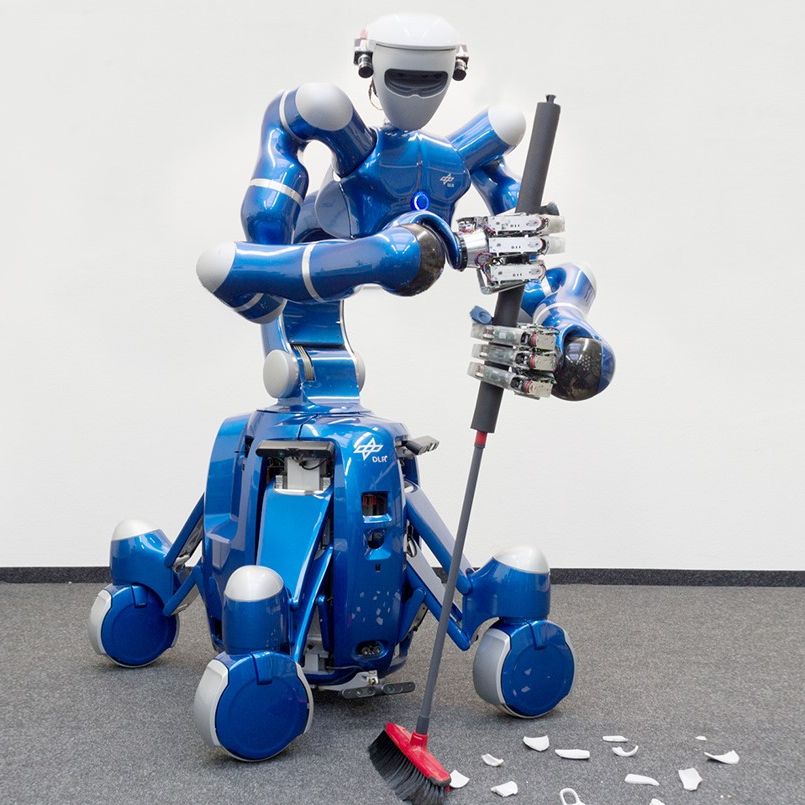
Analyzing gene sequences to predict diseases or developing robots that monitor their own health - research at the Munich School for Data Science (MUDS) has many facets.

Top Location for Computational Sciences
To form the Munich School for Data Science MUDS, the Technical University and the Ludwig Maximilian University in Munich as well as the Helmholtz Zentrum München (HMGU) and the German Aerospace Center (DLR) have joined forces with the Helmholtz Institute for RNA-based Infection Research (HIRI) to form an internationally visible and highly attractive research network.
MUDS also cooperates with the Leibniz Computing Centre (LRZ) and works with Roche Penzberg, Boehringer Ingelheim, Munich Leukemia Lab (MLL), and other industry partners to promote application-oriented doctoral projects in biomedicine.
Mission
The goal of MUDS is to train the next generation of Data Scientists at the intersection of data science and different application areas through a structured PhD program.
Although the specific research questions in these domains are different, all feature both purely data-based and model-based research approaches. The training at MUDS aims to explore new ways to combine these two poles.
Research Areas
- Medicine and Health
- Life Sciences
- Earth Observation
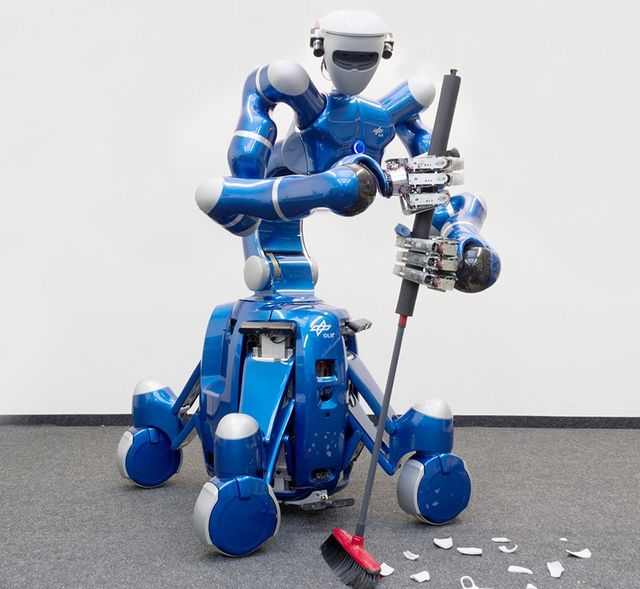
- Robotics
More about the research at MUDS
Reports on MUDS
The Munich School for Data Science unites strong research partners and is thus a magnet for future data scientists in a wide variety of areas of application. Read more about MUDS here!
Burning for Research: Doctoral Studies at MUDS
The Munich School for Data Science unites strong research partners and is thus a magnet for future data scientists in a wide variety of areas of application. The MUDS industry track gets companies involved in the training of doctoral candidates. Both sides, business and science, benefit from this cooperation.
Diabetes is still incurable. But with the help of data science, this could soon change. At MUDS, Karin Hrovatin is researching the cells involved in insulin production. The goal is to stimulate hormone production again in the future.
Deciphering the gene regulatory codes in our cells could improve the treatment of numerous diseases such as cancer or rheumatism in the future. MUDS doctoral researcher Laura Martens wants to contribute to this with her data science expertise.
Curriculum
- Supervision: Method and domain-specific mentoring by 2 PIs, supervision by an interdisciplinary Thesis Advisory Committee once a year
- Onboarding phase: elaboration of the research project and common basic data science training for all programme participants, creation of an individual, domain-specific study plan
- Mandatory courses for advanced scientific training: Block course "Fundamentals of Data Science", participation in retreats, two conference participations, participation in the MUDS seminar series
- Courses for personal skills training and career development (transferable skills): access for all MUDS doctoral candidates to relevant courses offered at the partner sites; in addition, it is possible to attend tailor-made trainings organised by the MUDS office
- MUDS certificate confirming participation in the programme
"Research at MUDS was great: I could learn from people in other fields and got ideas that I could also apply to biology."
KARIN HROVATIN
researched with Data Science on Diabetes at MUDS
Funding and Duration of the Programme
The program extends over four years and offers continuous funding. The remuneration corresponds to the conditions for doctoral contracts of the respective partner institution and is based on the TVöD or TV-L.
Application and Further Information
There is a central recruitment round once or twice a year. The MUDS location and thus the location for all courses is Munich. The programme language is English. The programme starts every winter semester, the application phase takes place in autumn and in spring/early summer.
Our Doctoral Researchers
Interested in getting to know the MUDS doctoral researchers and their projects? Click here!
Contact
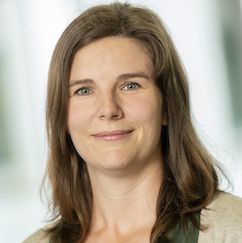
Dr. Julia Schlehe
Dr. Julia Schlehe
Scientific Coordinator MUDS
julia.schlehe@helmholtz-muenchen.de
Munich School for Data Science MUDS
Institute of Computational Biology
Helmholtz Zentrum München - Deutsches Forschungszentrum für Gesundheit und Umwelt (GmbH)
Ingolstädter Landstr. 1
85764 Neuherberg