HIDA Lecture: Strategies for Controlled AI-Assisted Coding
Speaker: Diaoulé Diallo, German Aerospace Center (DLR)
Date: 28.10.2026, 11 am
Title: Practical Strategies for Controlled AI-Assisted Coding
Abstract
AI-assisted coding has quickly become part of many programming workflows. Researchers, students, and developers use tools such as ChatGPT, GitHub Copilot, Cursor, Claude Code, or other coding agents to generate code, explain errors, refactor scripts, plan implementations, and debug software. However, there is not yet a broadly standardized, practice-oriented framework that helps everyday programmers decide how much control to keep and how to integrate LLMs into their coding workflow in a controlled and productive way.
This lecture offers a first practical framework for structuring AI-assisted coding. Instead of treating LLM-based coding as a choice between manually copying small code snippets from a chatbot or delegating an entire project to an autonomous agent, we will discuss a spectrum of orchestration intensities. The lecture also introduces coding stages as a way to decide when and how LLMs can support planning, coding, testing, debugging, verification, and documentation.
The goal is to help participants use AI coding tools more consciously by choosing the right level of assistance for the task, while maintaining understanding, reliability, and control. In addition, the lecture highlights relevant risks and responsibilities of AI-assisted programming, including issues of correctness, security, licensing, data protection, and scientific accountability.
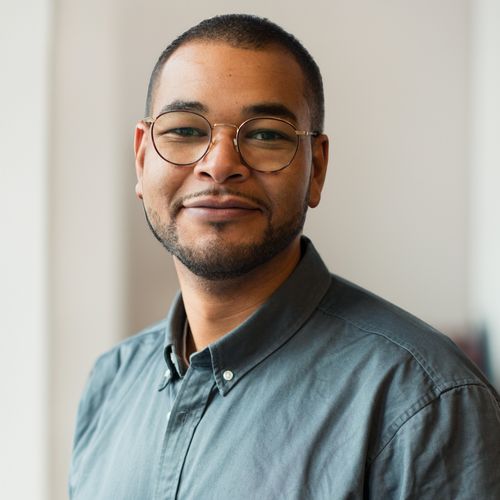
Diaoulé Diallo
Diaoulé Diallo is a postdoctoral researcher at the German Aerospace Center (DLR) - at the Institute of Software Technology. He recently completed his PhD in Computer Science at DLR in cooperation with the University of Bonn, where his research focused on network science and risk modelling in dynamic contact structures. His doctoral work included stochastic simulations, machine learning approaches, and methods for identifying and evaluating critical nodes and vulnerabilities in complex networks.
In his current research, he works on robustness and resilience in complex networked systems, including applications related to satellite systems and other distributed infrastructures. In addition, he conducts research on large language models, with a focus on safety, alignment, and interpretability, particularly activation-based methods for steering model behaviour.