HIDA Lecture: Towards Consentful Social Media and AI Systems

Speaker: Jane Im, CISPA - Helmholtz Center for Information Security
Date: 17.09.2026, 11 am
Title: Towards Consentful Social Media and AI Systems
Abstract
Traditional permission models tend to be system and outcome-centric - they are based on engineers' or lawyers' conception of privacy, where ease of programming or fidelity to some policy is the primary goal.
Such approaches do not center users' nuanced needs around privacy and safety. For example, the forms of information exchange that people manage are complex due to factors like social identities, such as race and gender, as well as lived experiences. Yet, existing privacy controls do not allow users to indicate such dimensions as perimeters when managing flows of information across different individuals.
Another example is how platforms automatically opt users into AI development without meaningful ways to specify what kinds of information, if any, they are comfortable contributing to model training.
Instead, Jane Im's research shows that consent is a better framework for considering a range of privacy, permissions, and related issues because it is user-centric and process-centric - a consent approach would not be satisfied until users can adjust who they interact with, clearly, easily, flexibly, and at any time.
In this talk, she will first discuss how to theoretically define affirmative consent for social media systems. Then, she will present several empirical studies that show ways to embed consent into social media and AI systems, along with the challenges that arise during the process.
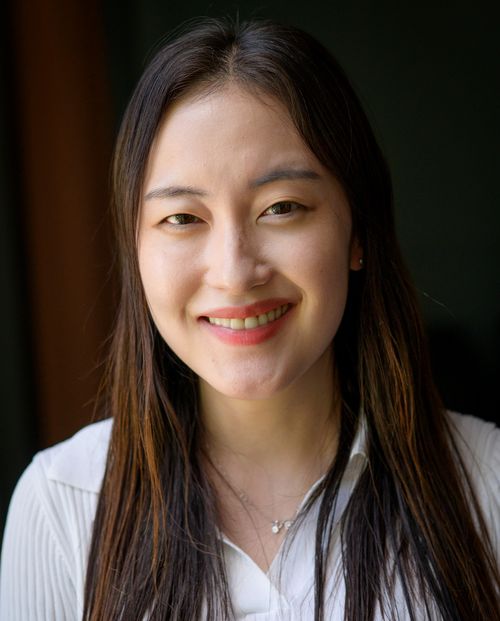
Jane Im
Jane Im is a tenure-track faculty member at the CISPA - Helmholtz Center for Information Security. She obtained her PhD from both the University of Michigan School of Information as well as the Department of Computer Science & Engineering. She leads the Real-world Interactions and Systems for Change (RISC) Group.
She designs and builds systems that address privacy, safety, and consent issues in socialmedia and AI. In particular, she is interested in developing consentful systems - systems that center people’s consent regarding their interactions and data. Consent is fundamentally about ensuring individuals - especially those who tend to be vulnerable - have meaningful agency to decide whether and how an interaction should occur.
Her work produces theoretical frameworks, deployable system designs, and empirical evidence for building consentful systems.